An efficient urban mass transportation system is crucial for any expanding economy. With the exception of expensive subway systems, the expansion of surface systems is limited by existing or growing surface congestion. The only remaining option to supplement these existing surface based systems is to travel above the ground.
Aerial systems were first used in China over 600 years ago to travel over streams. During the 1800’s, the technology was refined by the mining industry to transport minerals over difficult terrain. Currently the systems are primary used at ski areas. In the United States, more passenger trips are taken on aerial systems at ski areas than the all commercial airline flights.
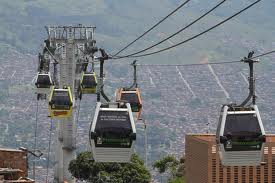
Aerial systems have an amazing potential for use in urban environments. They driven by electricity, use 10% of the energy of comparable systems, have a high capacity, cost about 20% of other systems, can be built above existing transportation corridors, can travel over obstacles and can be operational in one year with only minor construction impact.
These systems are currently being used around the world in urban environments. Although most of the systems are used as tourist attractions, their use for mass transit has been discovered in Columbia and Algeria. Both of these systems have been wildly successful and are being rapidly expanded. It is a matter of time before the rest of the world recognizes the potential for these systems.
All of the currently installed systems use the same basic technology. Angles stations now allow for alignment flexibility and passenger loading at multiple stations. With minor changes to the design, they can function as an efficient mass transit network that overlays any existing transportation system.
Transportation systems that are not on a dedicated corridor will see a decrease in capacity as congestion increases. The country that recognizes the potential of aerial systems and refines the technology will have an economic advantage over those who continue to rely only on surface transit systems that compete with automobiles.
This web site explores the benefits, characteristics and possible applications of aerial systems. See the attached summary report titled The Role of Aerial Sytems in Mass Transportation